Our model
Kangaroo care saves lives. The problem is delivery.
Kangaroo care has been Nigerian national policy since 2017. Fewer than one in twenty eligible newborns receive it.
We exist to close that gap.
The delivery gap
Three barriers keep kangaroo care from every newborn who needs it.
Kangaroo care has been Nigerian national policy since 2017. Fewer than one in twenty eligible newborns receive it. Implementation literature reviewed by ourselves and GiveWell reveals three recurring barriers limiting KC’s reach.
of surveyed facilities do not report offering kangaroo care — only 202 of 757 (27%) did (Save the Children).
Wards, wraps, and trained nurses aren’t there.
Most hospitals don’t have a dedicated KC ward, the equipment, or staff trained in the protocol.
routine indicators of KC coverage in operation nationwide.
Nobody is measuring what’s happening.
Without coverage and outcome data, quality improvement, donor buy-in, and recurrent funding all stall.
of eligible newborns receive kangaroo care nationwide.
SourceThe policy has no operational playbook.
Hospitals know KC works. They lack the dedicated staff, blueprint, and feedback loops to deliver it consistently.
Our model
How we close the delivery gap, hospital by hospital.
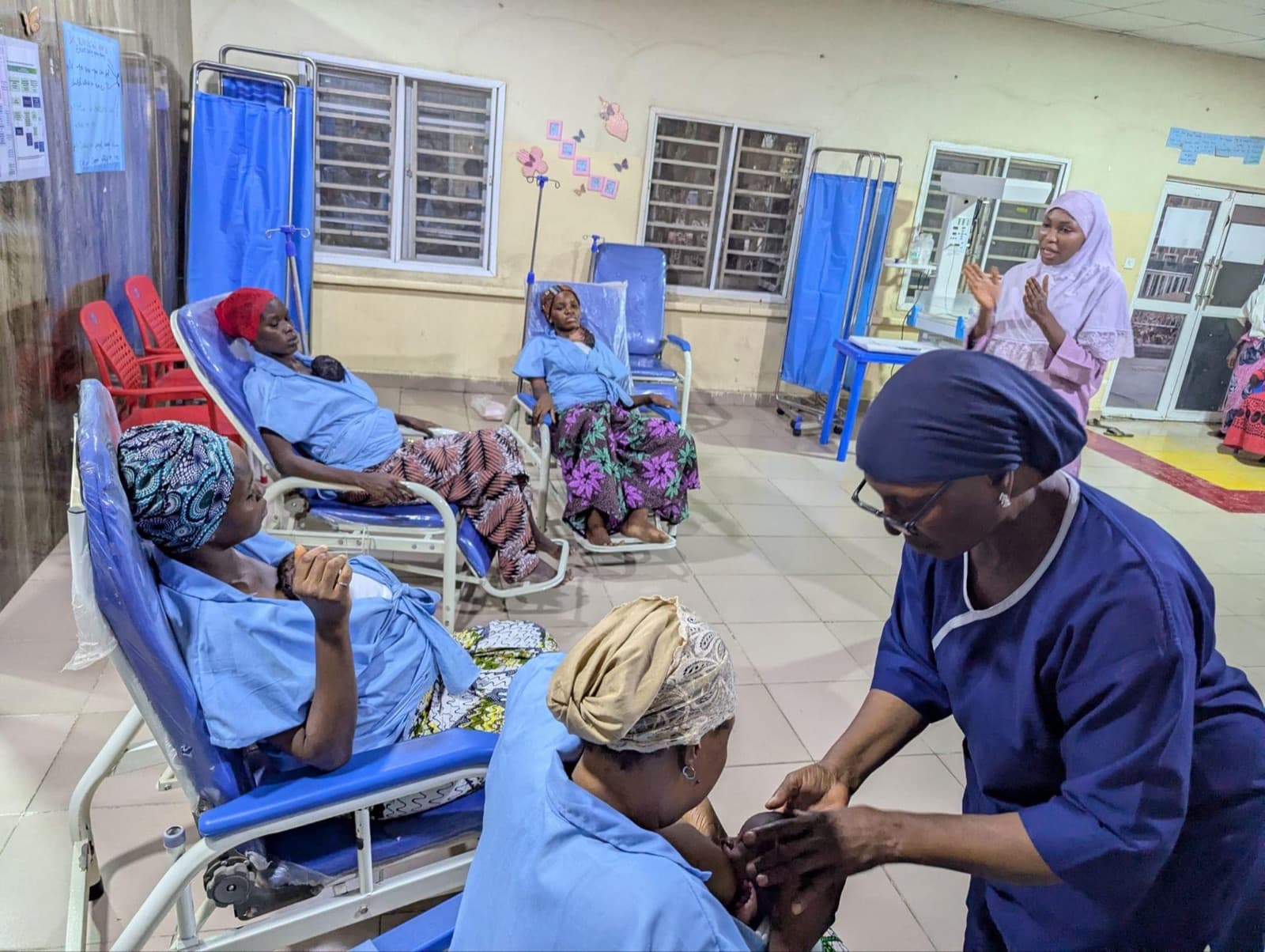
Our model turns kangaroo care from an underused policy recommendation into a reliable clinical service. Every eligible newborn is onboarded within 24 hours and receives continuous skin-to-skin care, breastfeeding support, and close monitoring of danger signs.
Chapter 01
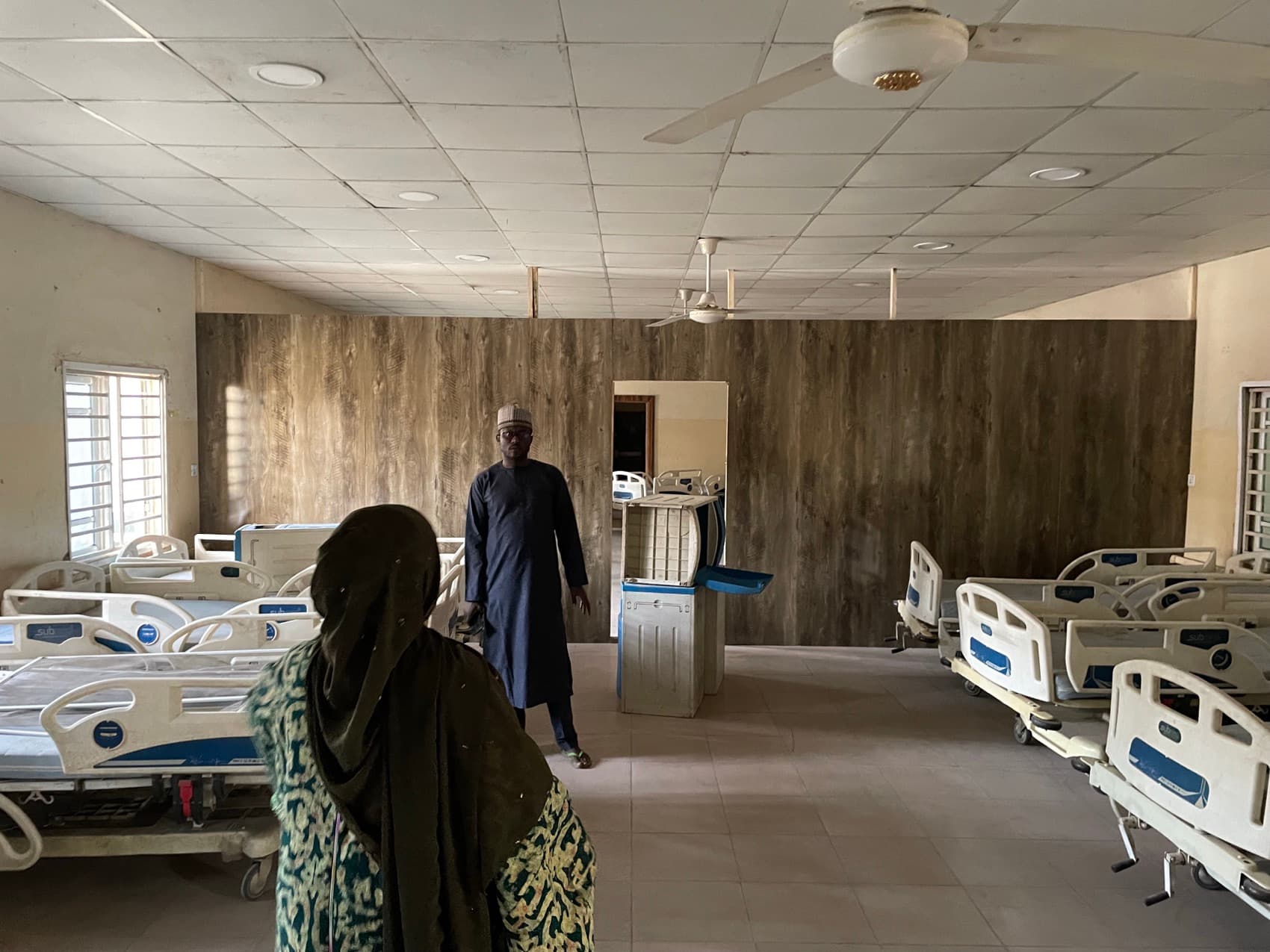
We establish dedicated kangaroo care wards.
We build capacity for kangaroo care, based on WHO recommendations and designed for the realities of a Nigerian hospital.
Chapter 02
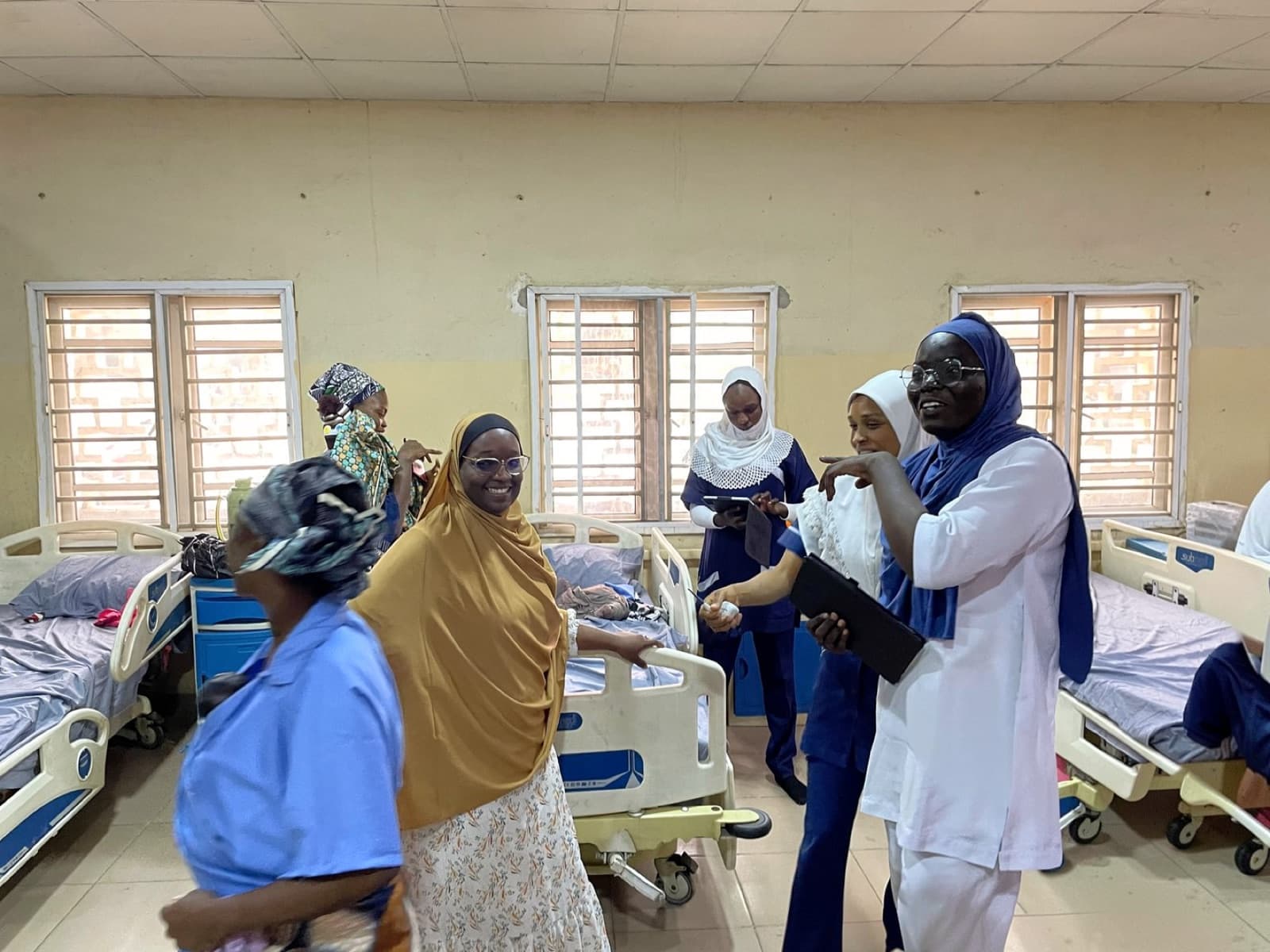
We deploy KC-certified nursing teams.
Each hospital receives full-time kangaroo care nurses and an on-site monitoring & evaluation coordinator to deliver onboarding, adherence support, and continuous coaching.
Chapter 03
We run real-time monitoring & improvement cycles.
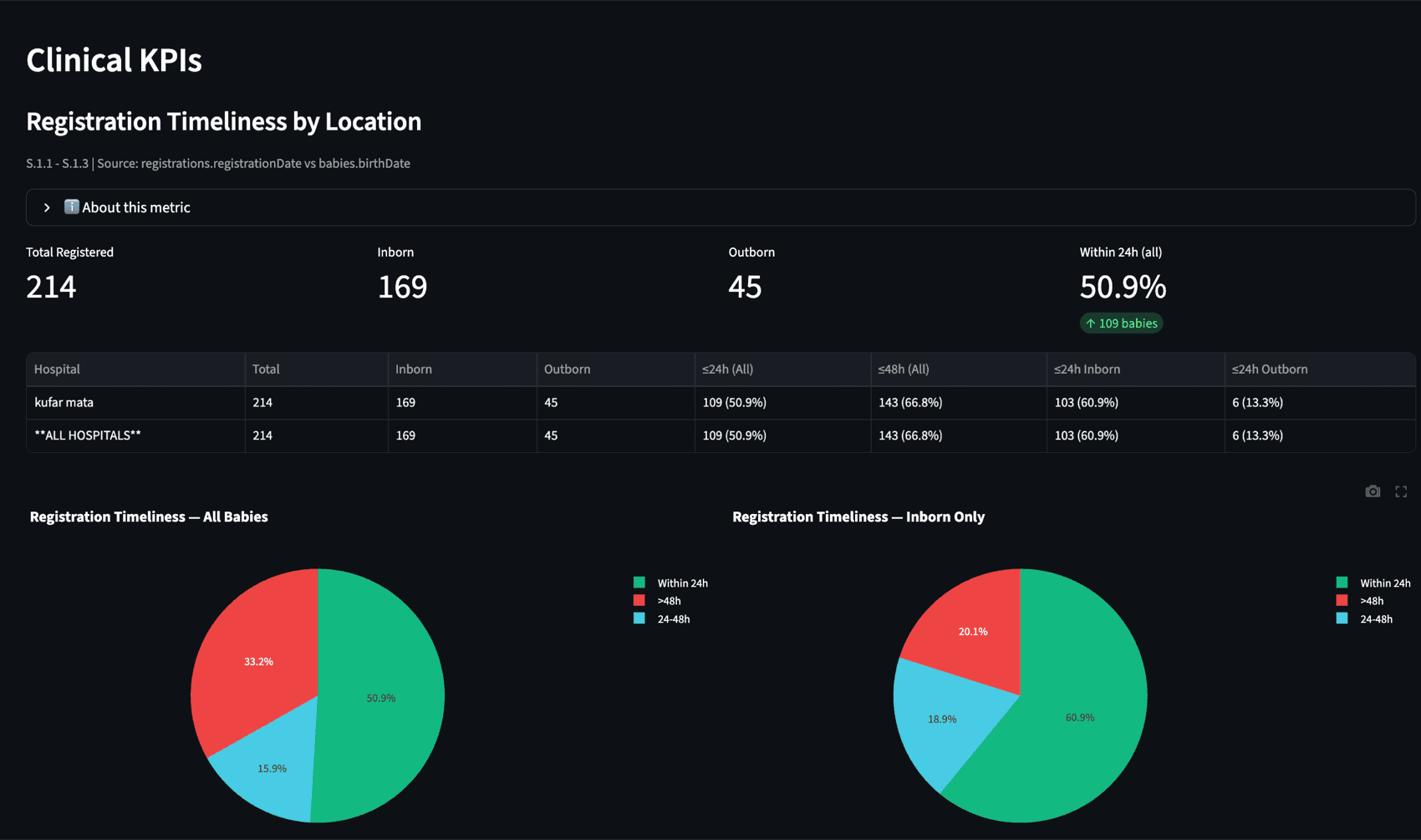
Using a digital M&E system developed by Ansh and adapted to Nigeria, we track every kangaroo care session, newborn status, and nurse interaction. Weekly dashboards let us iterate quickly, alongside the nurses on-site.
Chapter 04
We embed kangaroo care locally for long-term scale.
We collect effectiveness evidence and use it to unlock wider government adoption and recurrent funding, adapting all materials and delivery to the local context.
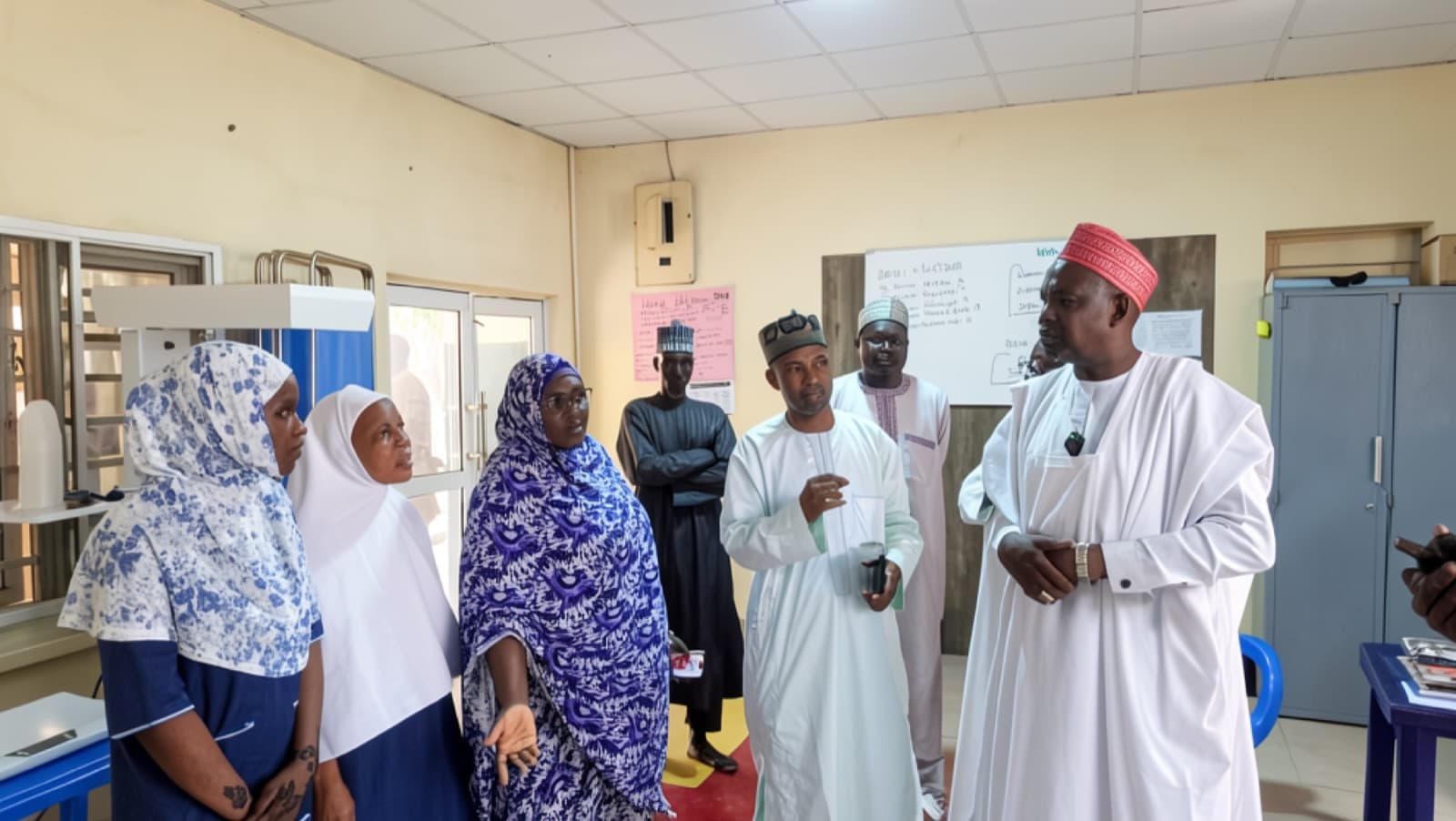
All the above is done within the public system. This means over time the government can take over our role of providing the inputs into hospitals that we currently do, and measuring the program rigorously last of all.
Our path to scale
We scale by proving the model, then handing it to government.
Nigeria’s Every Newborn Action Plan targets 90% kangaroo care coverage by 2030. We are the only partner implementing it in large public hospitals in Kano.
- 01
Baseline audit
Establish a clear starting point to measure and improve against.
- 02
Equip & train
Provide the ward, equipment, and skills to deliver kangaroo care.
- 03
Measure & iterate
Track every session and refine the approach continuously.
- 04
Government handover
Transition ownership to the hospital and state for the long term.